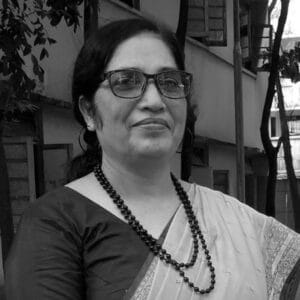
“It is a privilege to be the leader of WJCC, the only social and economic development organization in southwest Bangladesh. I am determined that WJCC will lead and inspire global action on gender equality, bringing together new energies and talents, and encouraging men and women from different backgrounds to join in this shared endeavor. Achieving gender equality and women’s rights is a global agenda that poses challenges for every country, rich and poor, north and south. In 1995, when I took the step of creating WJCC, lots of women and partners in growth and friends came forward to affirm that we all must rise to these challenges, and that WJCC should help lead and champion this process for women and children in every corner of south west Bangladesh. Without doubt, the last century has witnessed an unprecedented expansion of women’s rights, in one of the most profound social revolutions the world has ever seen. In 1893, New Zealand granted women the right to vote, becoming the first country in the world to do so. Today, that right is virtually universal. Millions of men and women around the world today advocate to end violence against women, and a record two-thirds of countries have passed laws against it. Yet we must also be concerned with the pace of change. It is not acceptable for young girls to be taken out of school, or for women to die from childbirth complications that could be prevented, but these things continue to happen every day. Girls still are less likely to go to school than boys. Two out of three illiterate adults are women. According to the Bangladesh Demographic Health Survey 2007, one-third of adolescents age 15-19 have begun childbearing.
Twenty-seven percent of teenagers in Bangladesh have given birth and another 6 percent are pregnant with their first child. Early childbearing amongst teenagers and pregnancy complications is more common in rural than urban areas. Additionally, it appears that even this discriminatory law has had little impact on the prevalence of early marriage in Bangladesh as it is estimated that half of women are younger than 18 when they marry. The lack of birth registration and lack of awareness of the detrimental effects of early marriage make enforcement of this law difficult. Women pay an unjustifiable price for discrimination, but they do not do so alone. The quality of our democracy, the strength of our economies, the health of our societies and the sustainability of peace — all are undermined when we fail to fully tap half the world’s talent and potential. Where women have access to secondary education, good jobs, land and other assets, national growth and stability are enhanced, and we see lower maternal mortality, improved child nutrition, greater food security, and less risk of HIV and AIDS. WJCC’s mandate to support faster progress towards gender equality is thus both morally right, and makes political and economic sense. We have much to do, but also great strengths to draw on. WJCC is already active in areas strategically important to accelerate progress for women. In 2010 and 2011, WJCC programmes in all regions of south west reported positive results in increasing women’s leadership, expanding women’s economic options, making women central to plans and budgets, and bringing women to peace resolution tables.
As we look towards the future, we know that WJCC alone cannot do all that needs to be done. We will not replace the good work done by others; rather, we will help orchestrate many valuable actions and contributions, so that they all add up to greater impacts and faster progress. We will reach out to partners in the Bangladesh, women’s groups and the private sector, and engage with a full spectrum of political actors, including ministers of finance and trade as well as health and education. We will assist our country to set gender equality standards, and support the implementation of policies, programmes and budgets to achieve them. I hope that one day we will look back and see 2012 as the beginning of a new era of gender equality and a better world for all.”
– Ashrafun Nahar (Founder & Chief Executive)
General Committee
General committee is the highest body of WJCC. It holds the supreme power of the organization. General committee is comprised of 21 member’s women representative of social elites, NGO, other professionals as well as the representative of target beneficiaries who are so potential and has well reputation in the society.
The general committee meets annually or as per organization requirement where they approve annual activity plan and performance report, annual financial statement and budget as well as either elect or select the EC committee for the period of three years.
Executive Committee
WJCC has a 7-member executive committee. Members of executive committee are elected by the general committee for a period of three years. Secretary is the executive head of the organization and is appointed by the executive committee. Coordinator is responsible for overall administration and program implementation.
Staffing
WJCC has a good number of well experienced and efficient staff at different level. Now WJCC has total 40 regular staffs of which 60% are female and 40% male where 15 staff are at head office based and the rest are the based-on projects/programs offices located in different operation areas. In addition, have over 5 trained disaster volunteers at ward level in different unions in Satkhira, Jesshore and Khulna district.